Category: Policy & Regulation

Government regulations, trade restrictions, compliance

  • Us defense production act & critical minerals: what’s actually happening: Latest Developments and Analysis

    Us defense production act & critical minerals: what’s actually happening: Latest Developments and Analysis

    **US Defense Production Act (DPA) powers have shifted from an emergency tool for munitions to a structural instrument for rebuilding critical mineral supply chains. In practice, DPA funding and priority authorities are reshaping midstream rare earth and battery-material processing far more than greenfield mining, with execution constrained by permitting, technology risk, and contractor capacity rather than by legal authority on paper.**

    US Defense Production Act and Critical Minerals: What Is Actually Happening in the Industrial Base

    Executive context: Over the last decade, the US Defense Production Act (DPA) has quietly moved from the margins of industrial policy into the center of critical mineral strategy. The same statute once associated mainly with wartime steel and aircraft procurement is now embedded in rare earth separation projects, battery‑material refineries, and magnet plants that sit at the heart of modern defense and energy systems.

    Behind the headlines, the DPA operates through specific titles, appropriation channels, and contracting mechanisms that determine which parts of the critical minerals chain actually change. The reality as of late‑2024 is clear: DPA activity is materially reshaping midstream and downstream capacity for rare earths, lithium, cobalt, nickel, graphite, titanium, and tungsten, while leaving many upstream mining bottlenecks structurally intact. Understanding that split is essential for assessing feasibility, compliance exposure, and operational risk across projects that touch US or allied defense supply chains.

    1. Strategic context: why the DPA is now a critical minerals instrument

    The DPA was enacted in 1950 for a very different industrial landscape. Its core purpose was to ensure that, in a national emergency, the US government could prioritize and expand production of materials and goods essential to national defense. For decades, that meant traditional defense articles: munitions, aircraft, shipbuilding, electronics.

    The shift to critical minerals reflects a deeper change in what counts as “defense‑relevant.” Precision‑guided munitions, radar systems, electric platforms, hypersonic weapons, and secure communications now depend on rare earth magnets, high‑purity titanium, specialty alloys, and battery‑grade lithium, nickel, cobalt, and graphite. Meanwhile, production and processing of many of these inputs are highly concentrated in a small number of jurisdictions, above all China for rare earths, graphite, and certain minor metals.

    Public US policy documents and National Defense Strategy updates since 2018 have consistently framed this concentration as an industrial base vulnerability rather than just a trade exposure. That framing is what brings critical minerals under the legal umbrella of the DPA: the statute can be used wherever the Executive Branch determines that industrial capacity is essential for national defense and cannot be relied upon from commercial markets alone.

    The result is that activities that might once have been left to conventional industrial finance-rare earth separation, lithium conversion, magnet production, advanced anode and cathode materials-are increasingly treated as defense infrastructure. DPA funding, priority orders, and related instruments are the mechanisms that translate this shift in definition into concrete projects, procurement contracts, and stockpile changes.

    2. How the Defense Production Act actually operates for minerals

    On paper, the DPA is broad. In practice, only a subset of its titles have been heavily used for critical minerals so far: primarily Title I (priorities and allocations) and Title III (expansion of production capacity and supply). Title VII shapes coordination and information‑sharing but is less visible in plant‑level execution.

    2.1 Title I – Priorities and allocations

    Title I allows the US government to require firms to accept and prioritize contracts or orders for materials deemed necessary for national defense, ahead of commercial customers. In a minerals context, this means that a mine or refinery with limited output can be legally required to allocate a portion of production to fulfill government contracts first.

    As of 2024, there has been limited public use of outright allocation authority in mining and refining. Instead, the main operational impact lies in priority rating of defense‑linked contracts. For example, a rare earth magnet producer supplying guidance systems may receive priority‑rated orders that cascade upstream into priority demand for separated oxides or alloy feedstock. The technical consequence is that plant scheduling and inventory management must account for orders that cannot be delayed without violating DPA obligations, constraining flexibility to chase spot market premiums or opportunistic offtake.

    From a process standpoint, this influences how plants design redundancy and buffer capacity. A magnet facility that operates near nameplate throughput with tight maintenance windows faces a different compliance risk profile under Title I than a facility with more conservative utilization. Even without formal allocation orders, awareness that production might be reprioritized in a future crisis affects capital planning and logistics design.

    2.2 Title III – Expansion of productive capacity and supply

    Title III is where most visible critical mineral activity has occurred. Under this title, the government can provide financial assistance-typically grants, cost‑shares, or purchase commitments—to expand or maintain domestic (and, in some cases, allied) industrial capacity for materials and components essential to defense.

    For minerals, Title III actions have supported rare earth separation plants, metal and alloy production, permanent magnet manufacturing, and battery‑material refining facilities. According to Department of Defense announcements, multiple projects across rare earths and battery minerals have received DPA Title III funding since 2020, often structured as multi‑year contracts with specific milestones for engineering, construction, commissioning, and production ramp‑up.

    Operationally, Title III does not override environmental or safety regulation. A DPA‑backed rare earth refinery still must secure permits under the National Environmental Policy Act (NEPA), Clean Water Act, and relevant state mining and industrial statutes. This means that DPA funding can accelerate engineering, equipment procurement, and early works, but permitting, water rights, waste management design, and community engagement often remain the rate‑limiting steps.

    2.3 Stockpiling and the DPA interface

    The National Defense Stockpile (NDS), administered by the Defense Logistics Agency (DLA), operates under separate statutory authorities but is strategically coupled to the DPA. Stockpile acquisition plans for rare earths, titanium sponge, tungsten concentrates, and battery‑grade materials increasingly assume that DPA‑enabled projects will exist to supply material that meets defense specifications.

    From the perspective of a mine or refinery, this coupling is critical. A DPA Title III award may support capex for a separation or refining line, while NDS procurement contracts underpin offtake at specified purity and packaging standards. The combination can be the difference between a facility designed only for commercial grades (for example, mixed rare earth carbonate or technical‑grade lithium chemicals) and one capable of producing defense‑specification oxides, metals, or powders with tighter impurity controls and traceability.

    3. Where DPA has been applied across the minerals chain (through 2024)

    Looking across public disclosures up to late‑2024, three broad clusters of DPA‑linked activity in minerals are visible: rare earths and magnets; battery materials; and selected structural and specialty metals. Each cluster has different technical and execution dynamics.

    3.1 Rare earths and permanent magnets

    Rare earths have been an early and prominent use‑case for DPA Title III. Projects have targeted both separation (producing individual rare earth oxides from mixed concentrates) and downstream magnet production (NdFeB and, to a lesser extent, SmCo magnets) for defense and high‑reliability applications.

    Typical DPA‑backed flowsheets for light rare earths (La-Nd, sometimes Pr) involve beneficiation of ore to concentrate, calcination or roasting, acid leaching (often using hydrochloric or sulfuric acid), impurity removal, and multi‑stage solvent extraction (SX) to produce separated oxides. For heavy rare earths (Dy–Tb and beyond), some projects leverage by‑product streams from existing operations or alternative feedstocks, with SX or ion exchange used for fine separation steps.

    On the magnet side, DPA‑linked projects generally include alloy production (melting and strip casting), powder production (hydrogen decrepitation, jet milling), pressing and sintering or bonded magnet routes, and precision machining with tight dimensional tolerances. Environmental controls around dust management, hydrogen handling, and rare earth oxide particulates are non‑trivial, especially where defense‑spec cleanliness and documentation are required.
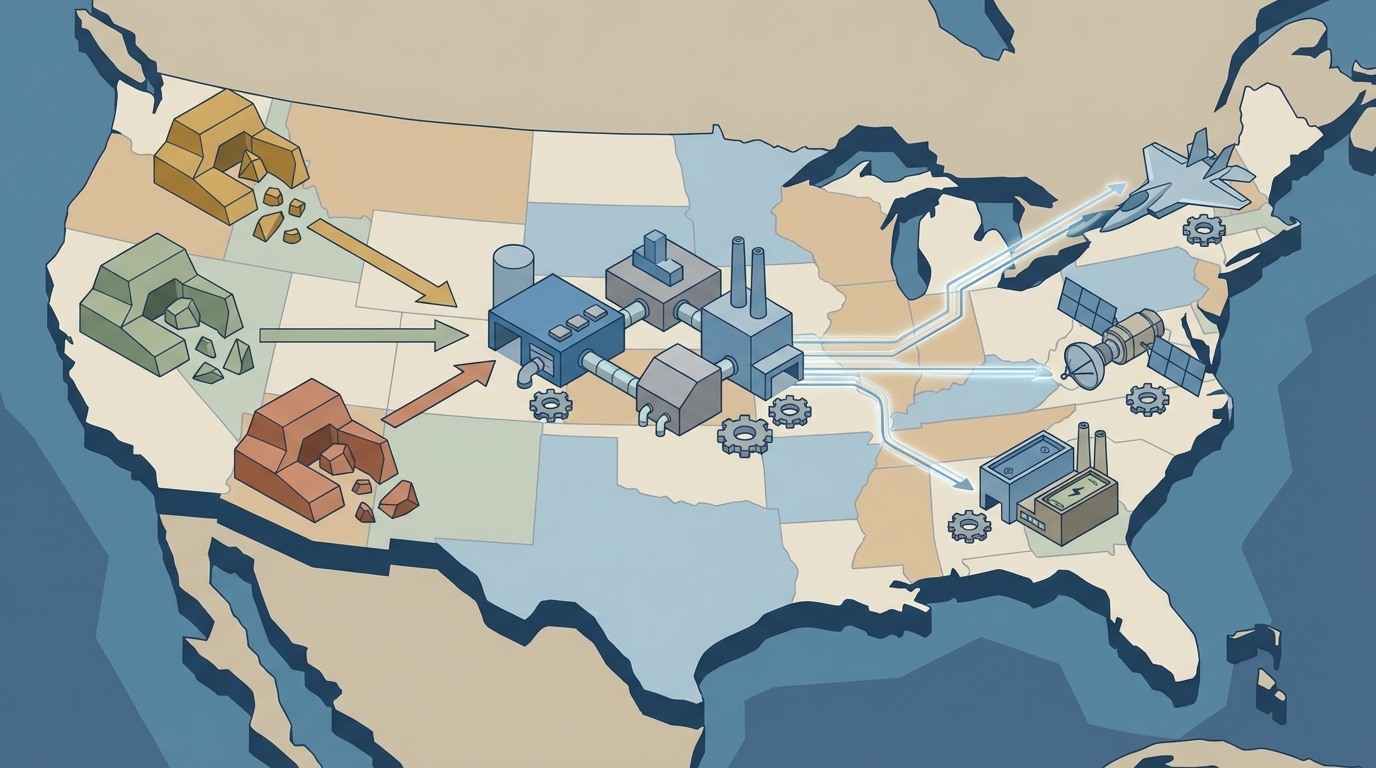
    Illustration of the critical minerals supply chain supporting U.S. defense production.
    Illustration of the critical minerals supply chain supporting U.S. defense production.

    The notable pattern is that DPA has focused far more on midstream separation and magnet capacity than on greenfield rare earth mining. Existing mines or advanced projects supply concentrates, while DPA resources target the parts of the chain where China’s dominance is most acute and where relatively modest capacity can unlock disproportionate system resilience.

    3.2 Battery materials: lithium, nickel, cobalt, graphite, manganese

    In 2022, the White House issued determinations bringing several battery‑related minerals—lithium, nickel, cobalt, graphite, and manganese—under DPA national defense priorities. Since then, DPA‑related funding and contracting activity has backed projects ranging from lithium chemical conversion to graphite anode materials and high‑purity manganese sulfate production.

    These projects typically sit in the refining and active material stages. For lithium, this can involve conversion of spodumene concentrates or brines into lithium carbonate or hydroxide suitable for battery‑grade LCE products. Critical process stages include calcination (for hard‑rock), acid or alkaline digestion, impurity precipitation, solvent extraction or ion exchange polishing, and crystallization. Each stage has strong energy, water, and reagent footprints; DPA support often targets equipment and process integration rather than fundamentally new chemistries.

    For graphite, DPA‑linked initiatives have focused on synthetic and natural graphite processing into anode‑ready materials. Unit operations include high‑temperature graphitization, shaping and classification, carbon coating, and binder integration. These are thermal and electricity‑intensive steps, sensitive to power pricing, emissions constraints, and local air quality regulation. DPA funding can underwrite high‑temperature furnaces, environmental control systems, and process control infrastructure that might otherwise struggle to pass internal hurdle thresholds under conventional capital discipline.

    3.3 Structural and specialty metals: titanium, tungsten and beyond

    Titanium and tungsten have long histories in defense applications but have recently reemerged in policy language as part of broader critical mineral concerns. DPA tools have been used intermittently to support titanium sponge and alloy production capacity, as well as tungsten powder and carbide supply chains linked to munitions and hard‑metal components.

    These segments tend to be less visible in public DPA announcements than rare earths or batteries, but they share similar dynamics: the challenge is often not basic mining, but stable access to intermediate forms—titanium sponge, high‑purity ferro‑tungsten, fine tungsten powders—that meet tight aerospace and munitions specifications. DPA projects in this space commonly focus on modernizing older facilities, replacing legacy furnaces or reduction reactors, and improving product consistency through better process control and analytical instrumentation.

    4. Technical and operational consequences for mining, refining, and magnet projects

    The most important insight from several years of DPA application to minerals is that the statute does not erase engineering and operational constraints; it reshapes where they matter most. Capital may become less scarce, but process risk, permitting timelines, workforce availability, and technology selection remain decisive.

    4.1 Technology choice: proven flowsheets vs new processes

    DPA‑backed projects in rare earths and battery materials cluster around two ends of a spectrum. On one end are facilities based on conventional, well‑understood flowsheets: multi‑stage SX for rare earth separation; sulfuric acid leaching and neutralization for laterite nickel; traditional calcination and hydrometallurgy for spodumene. On the other end are projects seeking to commercialize newer approaches such as advanced ion exchange systems, membrane‑based separations, or direct lithium extraction (DLE) from unconventional brines.

    Because DPA’s statutory mission is industrial base reliability, project selection tends to favor technologies with demonstrated pilot performance and clear pathways to defense‑grade product specifications. Novel processes are not excluded, but the bar for evidence—continuous pilot data, impurity profiles, reagent recycling performance, by‑product management—is high. A plant relying on an unproven DLE technology with uncertain long‑term sorbent performance or scaling behavior faces a very different risk profile than a plant extending an established sulfate leach and SX train, even if both are nominally “DPA‑backed.”

    This leads to a subtle but important effect: DPA can accelerate the deployment of incremental innovations (better solvent systems, improved resins, more efficient kilns) more readily than it can underwrite highly speculative process revolutions. After extended monitoring of project announcements and technical disclosures, one pattern stands out: the statute is reshaping the geography of conventional processing capacity more than it is changing the underlying chemistry of extraction and separation.

    4.2 Energy, water, and waste as design constraints

    Rare earth separation, lithium refining, and high‑temperature graphite processing share a common reality: they are resource‑intensive. Energy use is measured in significant kWh per tonne of product; water intensity and reagent consumption are non‑trivial; and waste streams—acidic liquors, neutralized sludges, red muds, calcined tailings—must be managed under increasingly tight environmental standards.

    DPA funding does not exempt facilities from state air and water permits or from federal hazardous waste rules. Instead, it often requires additional environmental and reporting covenants. Projects backed by Title III contracts frequently incorporate enhanced effluent treatment, tailings management systems with higher factors of safety, and more sophisticated emissions abatement (for example, for HF, SO2, or NOx) than early conceptual designs envisioned.
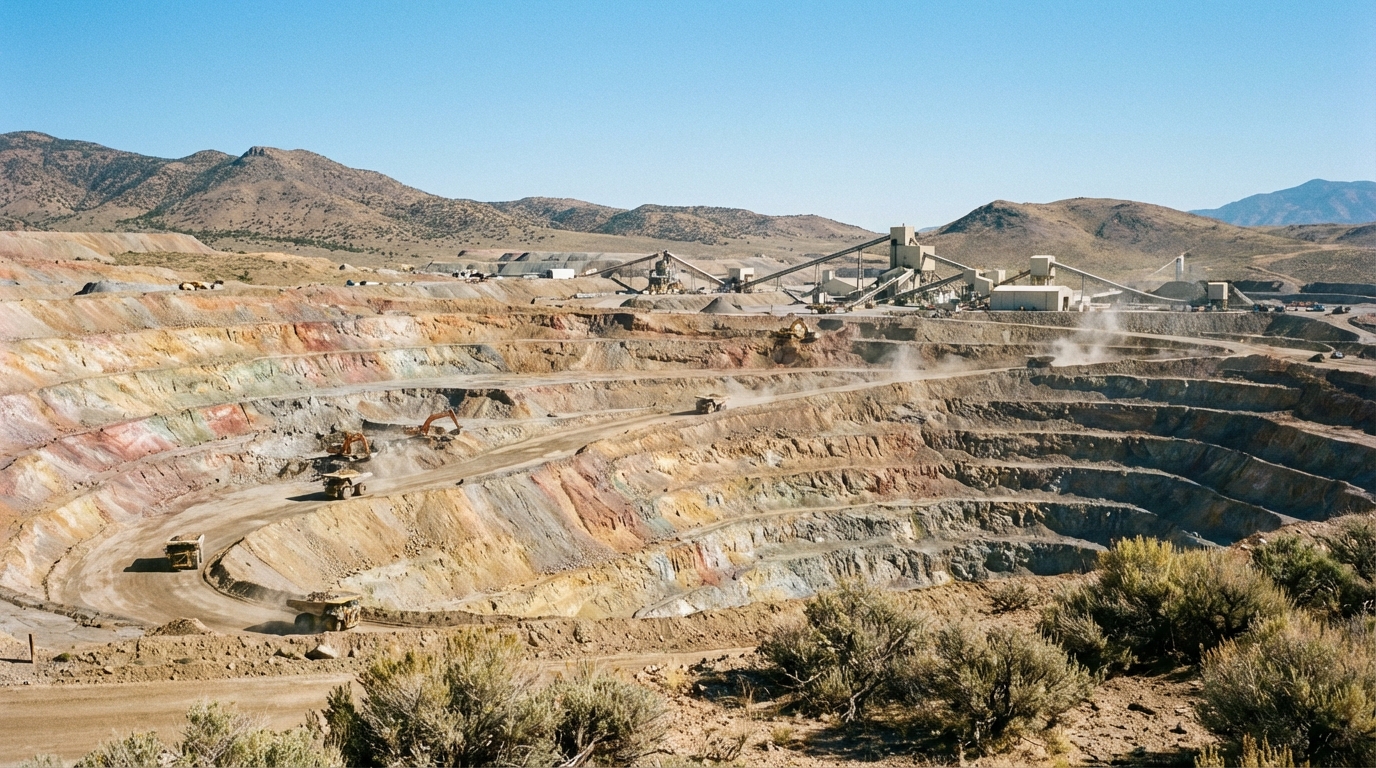
    A critical minerals mine reflecting the upstream challenges in securing supply.
    A critical minerals mine reflecting the upstream challenges in securing supply.

    This matters for capex and opex drivers. A rare earth SX plant designed for defense‑grade oxides with strict impurity limits typically requires more extraction stages, tighter control of organic/aqueous phase ratios, more extensive analytical QA/QC, and more robust solvent regeneration systems than a plant optimized for generic commercial mixed oxides. Each of these additions carries energy and reagent penalties. Title III money can offset the capital burden of installing this equipment, but operating costs remain with the plant operator over the facility’s life.

    4.3 Workforce, commissioning, and ramp‑up risk

    Rare earth separation, hydrometallurgical refining, and high‑spec metal/alloy production are skills‑intensive activities. Many DPA‑backed projects in North America and allied countries are being executed in regions without deep prior experience in these exact processes, especially when compared with Chinese industrial hubs that have accumulated decades of tacit knowledge.

    Commissioning risk shows up in longer‑than‑expected ramp‑up curves, off‑spec product, and higher reagent consumption during early operations. To mitigate this, Title III contracts often include explicit milestones tied not just to mechanical completion but to sustained production at target specifications. This alignment of incentives can reduce the risk of partially completed “showpiece” plants, but it cannot fully compensate for gaps in operator experience, local supply chain depth (for spare parts, specialty chemicals, analytical services), and regional power and water reliability.

    A striking realization from tracking several rare earth and battery‑material builds is that DPA primarily derisks the financial aspect of early capacity build‑out; it does not derisk the practical art of running a complex hydrometallurgical or powder metallurgy operation day after day. That residual gap is where many projects will ultimately succeed or fail.

    5. DPA versus other industrial tools: where it fits

    The US policy toolkit for critical minerals now includes the DPA, Department of Energy (DOE) loan and grant programs, tax credits under recent legislation, export finance, and state‑level incentives. Each tool targets different failure modes in the market.

    DOE’s Loan Programs Office typically focuses on large‑scale energy transition projects with the ability to service debt from future cash flows, often emphasizing climate impact and innovation. Tax incentives under recent laws favor projects that can quickly reach taxable income and that fit defined technology categories. Export‑import finance and development finance target cross‑border projects aligned with broader geopolitical objectives.

    By contrast, the DPA is narrower in mission—national defense—and more flexible in structure. Title III funding can cover early engineering, equipment procurement, and construction even when future cash flows are uncertain or when product will initially be sold under specialized defense contracts rather than broad commodity markets. It is particularly well suited to “orphan” midstream assets—separation plants, alloy facilities, magnet lines—that are strategically necessary but commercially thin.

    However, the statute depends on annual or multi‑year appropriations and political prioritization. This means that DPA use can be episodic and subject to shifts in focus (for example, from rare earths toward batteries or from one family of metals to another). For industrial planners, this variability translates into execution risk: a plant designed around a one‑time Title III build grant still needs a long‑term cost structure that is competitive without recurring public infusions.

    6. Risk, compliance, and execution constraints that outlast the statute

    DPA involvement changes a project’s regulatory and contractual perimeter. It also introduces new points of failure. Several categories of risk are particularly material for critical mineral projects linked to defense supply chains.

    6.1 Environmental and social license

    Rare earth separation and battery‑material refining carry legacies of environmental damage in multiple jurisdictions. As a result, public scrutiny of new projects—especially those with explicit government backing—is intense. NEPA processes, state environmental reviews, and in some cases indigenous consultation frameworks can extend timelines and impose design changes that alter project economics.

    DPA support does not override these requirements; if anything, it raises expectations. A project receiving Title III funds is more likely to be challenged on its environmental impact statement, water use, or waste storage design. Tailings dam configurations, brine reinjection plans, and off‑gas treatment systems become not only engineering decisions but political ones. An environmental incident at a DPA‑backed facility would have outsized reputational and policy consequences, which is one reason why technical conservatism tends to dominate flowsheet selection in these programs.

    6.2 Foreign ownership, offtake, and technology control

    Given the statute’s national defense focus, DPA‑linked contracts typically contain provisions related to foreign ownership, control, and influence. The Committee on Foreign Investment in the United States (CFIUS) and related mechanisms scrutinize equity participation, board representation, and offtake agreements with entities from countries designated as posing strategic concerns.

    For rare earth and battery‑material projects, this often interacts with reality on the ground: process know‑how, critical equipment, and offtake chains are frequently global. Facilities seeking DPA support while maintaining technology partnerships or offtake with major Asian processing or trading firms must navigate complex contractual structures to satisfy both commercial requirements and security‑driven restrictions on data, product flows, and intellectual property.

    An underappreciated risk is that constraints on offtake flexibility can reduce a plant’s ability to balance defense‑linked orders with broader market participation. A facility heavily tied to defense procurement, with limits on sales to higher‑margin commercial buyers, may face tension between industrial base resilience objectives and internal financial performance targets.

    6.3 Contracting, reporting, and cyber requirements

    Title III agreements are not conventional commercial supply contracts. They often incorporate Federal Acquisition Regulation (FAR) and Defense FAR Supplement (DFARS) clauses, cybersecurity requirements, domestic preference rules, and detailed reporting obligations on cost, schedule, subcontracting, and data management.
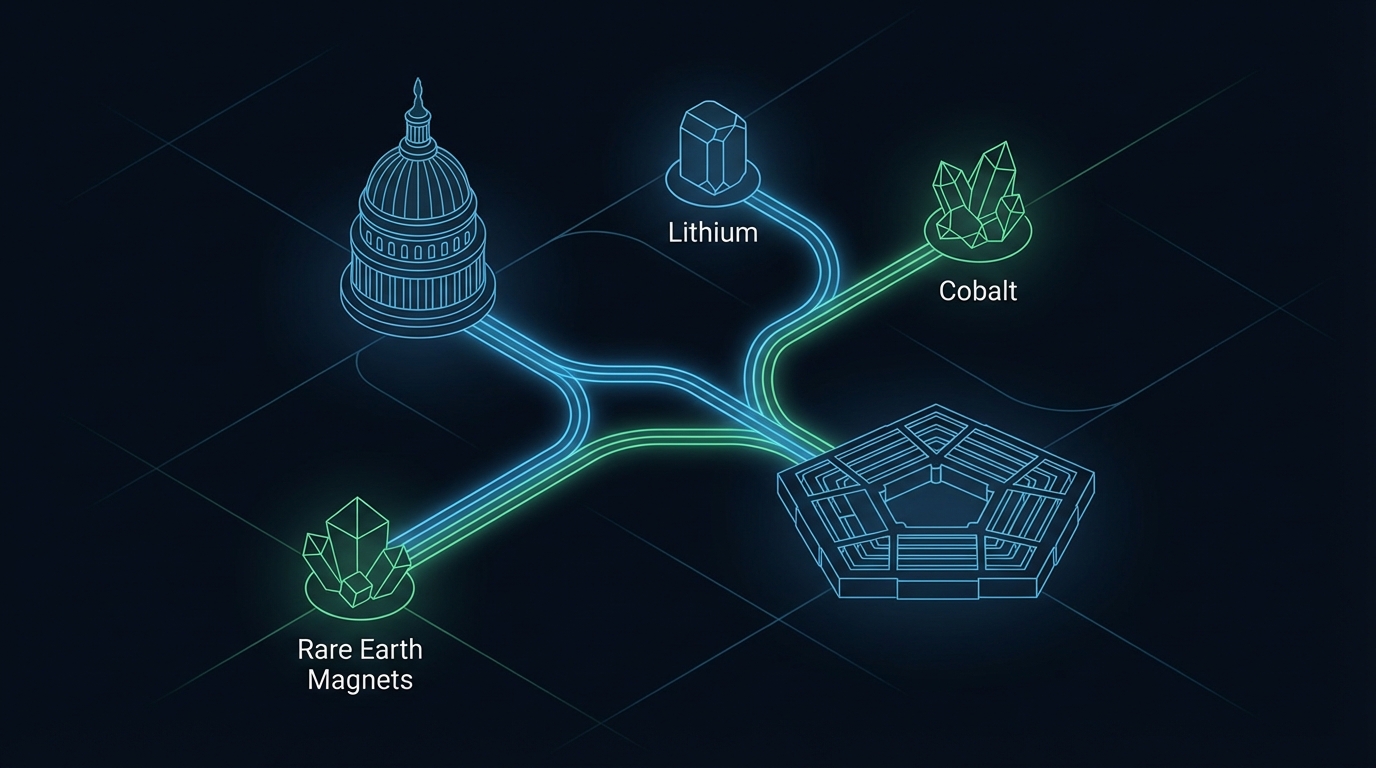
    Conceptual graphic showing the connection between U.S. policy and critical mineral security.
    Conceptual graphic showing the connection between U.S. policy and critical mineral security.

    On the plant floor, this translates into additional systems: secure data environments for process control and quality records, audit‑ready maintenance and calibration logs, traceability for batches of ore, intermediates, and final products, and sometimes restrictions on using foreign‑supplied control software or network equipment. These overlays affect staffing, IT architecture, and vendor selection. They also create new failure points: a cybersecurity non‑compliance incident or misreported milestone can jeopardize funding even if the physical plant is progressing to plan.

    After tracking multiple DPA‑linked projects, a recurring pattern emerges: DPA funding moves front‑end capital risk from private balance sheets to the public ledger, but process risk and compliance risk remain fully in the operator’s domain. Managing those two risks in parallel is often more challenging than closing the initial funding gap.

    7. International dimension: allied supply chains and competing policy models

    DPA authorities traditionally focused on domestic industry, but critical minerals supply chains do not respect national borders. Recent years have seen the statute applied in ways that support allied industrial capacity as well, particularly where facilities in partner countries are tightly coupled to US defense programs or where they supply unique processing stages not yet available domestically.

    Australian‑linked rare earth separation in the United States, North American magnet production involving Japanese and European technology providers, and joint processing initiatives with Canadian miners illustrate how DPA tools integrate with allied capabilities. Parallel frameworks such as the Minerals Security Partnership (MSP) and bilateral critical minerals agreements with countries like Australia and Canada provide diplomatic and regulatory scaffolding around these projects.

    At the same time, competing policy models shape the playing field. China’s Ministry of Commerce (MOFCOM) export controls on gallium, germanium, and certain rare earth technologies, along with licensing requirements for specific processing technologies, highlight a different approach centered on export leverage and technology control. The European Union’s Critical Raw Materials Act adds yet another model, emphasizing diversified sourcing and environmental standards.

    In this environment, the DPA functions less as a standalone instrument and more as one node in a network of industrial policies across jurisdictions. For project developers and operators, this means that rare earth or battery‑material plants may simultaneously respond to DPA‑driven defense requirements, EU environmental norms, and Asian customer specifications, all while navigating export controls and sanctions regimes that evolve over time.

    8. Forward‑looking industrial scenarios and trade‑offs (to late‑2024)

    Without speculating beyond publicly available information through late‑2024, it is possible to delineate several structural paths for how DPA use in minerals could evolve, each with distinct implications for technology choices, plant design, and operational risk.

    One path emphasizes DPA as a targeted gap‑filler. Under this model, the statute continues to focus on specific bottlenecks—heavy rare earth separation, high‑coercivity magnet production, battery‑grade graphite—that are unlikely to be financed at scale by commercial markets alone. The emphasis remains on midstream processing and defense‑linked downstream components, with relatively limited involvement in new mine development. Technical risk under this path centers on scaling conventional flowsheets in new geographies while meeting tighter environmental and quality standards.

    A second path envisages more systemic DPA involvement across the chain, including upstream. This would imply DPA support for mining projects where orebody characteristics (grade, mineralogy, impurity suite) are well understood but capital and offtake remain uncertain due to geopolitical or ESG headwinds. In that scenario, DPA would be pulled closer to geotechnical risk, resource modeling uncertainty, and mine closure liabilities, rather than mainly processing‑plant risk. The skill sets and timelines involved would be very different from the Title III projects seen to date.

    A third path treats DPA primarily as an emergency tool, with limited peacetime deployment but strong readiness to issue priority orders and allocate production in a crisis. Here, the statute’s impact depends less on annual funding levels and more on how much fungible, dual‑use capacity exists in allied systems. Plants capable of switching between commercial and defense‑grade production, or between different rare earth or battery‑material product slates, would be central to this model. The key design variable becomes flexibility, not just nameplate throughput.

    Across all paths, one constant trade‑off stands out: speed versus robustness. Accelerated project timelines enabled by DPA can bring critical capacity online sooner, but they leave less time for iterative optimization of flowsheets, piloting of impurity removal strategies, and development of local workforce expertise. Conversely, more cautious, multi‑stage deployment reduces early capacity but can improve long‑term plant performance and environmental outcomes. DPA interventions sit at the center of this tension, and the institutional appetite for risk will largely determine where the balance lands.

    9. Conclusion: what actually matters in DPA‑backed minerals projects

    As of late‑2024, the practical record of the Defense Production Act in critical minerals is neither a panacea nor a footnote. It has demonstrably accelerated midstream rare earth and battery‑material capacity, enabled magnet and alloy projects that would have struggled under conventional financing alone, and signaled that certain materials are now regarded as part of defense infrastructure rather than just industrial commodities.

    At the same time, the statute has not eliminated the structural constraints that define mining and processing projects. Orebody quality, flowsheet robustness, permitting timelines, energy and water availability, and workforce depth continue to dominate operational risk. DPA funding can change who bears early capital risk and how quickly plants are built, but it does not change the thermodynamics of leaching, the chemistry of solvent extraction, or the realities of managing tailings and emissions over decades.

    For critical minerals, the most accurate way to think about the DPA is as a mechanism that rebalances where risk sits in the system. Financial and offtake risk for strategically significant processing capacity moves toward the public sector; process, environmental, and compliance risk remain with operators and their supply chains. After careful review of projects to date, one insight is particularly quotable: the DPA changes who pays for the plant, but not who lives with the flowsheet.

    Note sur la méthodologie TI22 TI22’s analysis of DPA and critical minerals triangulates public US policy documents (including DPA determinations and National Defense Stockpile plans), allied and competitor measures (such as MOFCOM export controls and EU critical raw materials frameworks), and the technical specification demands of downstream defense and energy systems. This cross‑reading of legal texts, industrial data, and process‑level requirements underpins a continuous horizon scan of where policy signals intersect with real‑world metallurgical and mining constraints.

    Within this framework, the distinctiveness of the Ti22 Strategies approach lies in connecting legal authority and budget lines to concrete engineering and operational decisions across exploration, beneficiation, refining, and advanced material production. The focus remains on how statutory tools like the DPA alter the configuration of technical options, procurement relationships, and compliance obligations in the real industrial base. This analysis is therefore paired with active monitoring of weak policy, technical, and market signals that will define the next phase of DPA‑linked critical minerals development.

    Sources

  • China rare earth export controls: Latest Developments and Analysis

    **China’s 2025 rare earth export controls represent a structural shift: from tonnage-based trade measures to a fine‑grained regime combining material, technology, and extraterritorial rules. The 0.1% de minimis threshold, mandatory compliance notifications, and controls on mining and processing know‑how rewire how rare earths, magnets, and battery materials move through global supply chains. The temporary suspension of part of the regime until 10 November 2026 does not unwind the architecture; it simply creates a narrow window in which operational choices and technical configurations will determine who absorbs the next shock.**

    China’s Rare Earth Export Controls: From Tariffs Response to Systemic Redesign (2025-2026)

    The rare earth export controls deployed by China between April and November 2025 mark a decisive break from earlier commodity‑focused measures. What began as a direct response to U.S. tariffs rapidly evolved into a multi‑layered system covering specific rare earth elements (REE), production equipment, intangible technologies, and even foreign‑made products containing Chinese content above a 0.1% value threshold.

    This architecture is more than a diplomatic signal. It inserts Chinese licensing authority deep into midstream and downstream industrial flows that rely on heavy and light rare earths, permanent magnets, and certain lithium‑ion battery materials. The temporary suspension of the second wave of measures until 10 November 2026 relieves short‑term pressure but leaves the underlying compliance and traceability regime firmly in place.

    For technical decision‑makers in mining, separation, metallurgy, and advanced manufacturing, the controls reshape three core questions: which process technologies can be deployed outside China, which material routes remain licensable and predictable, and how far extraterritorial reach extends into complex multi‑tier supply chains. The sections below dissect the regulatory timeline, scope, compliance mechanics, and plausible 2026 trajectories through a technical and operational lens.

    I. Regulatory Timeline: Three Restrictive Waves in Seven Months

    1. First Wave – 4 April 2025: Announcement 18 and Initial Heavy Rare Earth Controls

    On 4 April 2025, in direct reaction to the so‑called “Liberation Day” tariffs imposed by the U.S. administration, China’s Ministry of Commerce (MOFCOM) and the General Administration of Customs issued Announcement No. 18 of 2025. This first wave introduced export controls on seven heavy rare earth elements and their associated compounds, metals, and magnets [2]. Although the list in public summaries is not fully itemized, it clearly targets heavy REEs that are critical to high‑performance permanent magnets and defence‑relevant alloys.

    From an operational standpoint, Announcement 18 did three things. It imposed licensing requirements on exports of the listed elements and associated products; it required detailed disclosure of end users and end uses; and it created an administrative gate through which sensitive applications could be filtered. Industry feedback described the licensing workflow as opaque and selectively enforced, with lead times that introduced new uncertainty into contract performance [2].

    On 13 May 2025, China agreed to suspend these non‑tariff measures, including the rare earth restrictions, for 90 days as part of tariff negotiations with the United States [6]. The pause reduced immediate shipment risk but left the institutional machinery-licensing protocols, lists, and enforcement structures-intact, ready for redeployment.

    2. Second Wave – 9 October 2025: Decrees 61 & 62 and a Step‑Change in Scope

    The second wave, announced on 9 October 2025, transformed a targeted response into a systemic control regime. MOFCOM Decrees No. 61 and 62 of 2025 expanded export controls along three axes [1]: additional rare earth elements, upstream and midstream technologies, and foreign‑made products containing Chinese rare earth inputs.

    Decree 61 focused on metals and products related to rare earths, including those manufactured outside China that incorporate Chinese‑origin materials. Decree 62 concentrated on associated technologies, spanning mining, smelting and separation, magnet materials, and recycling [1]. On the same day, four related measures imposed controls on [1]:

    • Certain rare earth manufacturing equipment and associated materials/components
    • Five rare earth minerals and related materials: holmium, erbium, thulium, europium, and ytterbium
    • Selected materials and components for lithium‑ion batteries and artificial graphite anodes
    • Categories of “super materials” and associated equipment

    A fifth decision placed 14 firms on China’s Unreliable Entity List [1]. Together, these moves extended controls beyond tangible raw materials to encompass technological know‑how and the foreign plants that rely on it. The number of controlled rare earth elements increased by five, bringing the total to 12 across the first and second waves [2]. Parallel commentary noted that neodymium, dysprosium, terbium, samarium, and praseodymium were also referenced in new regulations entering into force on 1 December 2025 [4], signalling attention to the key magnet and phosphor elements used in EV drivetrains, wind turbines, and optics.

    3. Third Wave – 7–8 November 2025: Temporary Suspension and Extraterritorial Reach

    On 7 November 2025, the Chinese government announced a temporary suspension of the second‑wave export controls until 10 November 2026 [2][7]. The suspension covered Decrees 61 and 62 and associated extraterritorial provisions, while leaving the April measures in force. Market reaction treated this as a de‑escalation, but the relief was partial and conditional.

    One day later, on 8 November 2025, MOFCOM and the General Administration of Customs issued Announcements 55–58 of 2025, effective immediately [3]. These announcements broadened control coverage to include:

    • Super materials and related equipment
    • Rare earth processing equipment
    • Raw rare earth materials
    • Medium and heavy rare earth products
    • Lithium‑ion battery materials and artificial graphite anodes

    The structure of the regime therefore shifted, but was not dismantled. The suspension postponed full activation of the extraterritorial and technology‑transfer components while consolidating control over equipment, raw materials, and selected downstream products.

    II. Scope of Control: 12 Rare Earths, Technology Layers, and the 0.1% Rule

    1. The Controlled Rare Earth Elements

    Across the first two waves, 12 rare earth elements moved into explicit Chinese export control coverage [2]. The five added on 9 October 2025-holmium, erbium, thulium, europium, and ytterbium—are all heavy or middle REEs with specialised roles in lasers, high‑end optics, phosphors, and magnet modifications [1]. Combined with the earlier group of seven heavy REEs and expanded mention of neodymium, dysprosium, terbium, samarium, and praseodymium in later regulations [4], the focus is clear: functional bottlenecks in permanent magnets, display technologies, and defence‑relevant components.

    This is not a blanket restriction on all 17 rare earth elements. Instead, it targets those with the tightest Chinese dominance in mining and, more importantly, separation and metal‑making. That targeting is where technical leverage translates directly into regulatory leverage.

    2. Extraterritoriality via the 0.1% Value Threshold

    The most structurally novel element is the assertion of extraterritorial control through a de minimis‑style rule. If a foreign‑manufactured product contains Chinese‑origin rare earth materials whose value exceeds 0.1% of the value of an independently usable unit, subsequent export of that product to a third country can also require MOFCOM approval [3].

    This 0.1% threshold is remarkably low compared with typical export control de minimis rules in other jurisdictions, which often operate at substantially higher value shares. It pulls a wide range of assemblies into scope: motors, drives, sensors, catalysts, and consumer electronics where rare earth magnets or phosphors constitute a small share of bill‑of‑materials cost but are functionally critical.

    Operationally, this extraterritorial design converts Chinese origin status from a customs attribute into a compliance attribute that follows the product through successive transformations. Each time a motor or sub‑assembly crosses a border, the presence of controlled Chinese REE content can, in principle, trigger an additional licensing step if the final destination is a third market.

    3. Controlled Technologies and Know‑How

    Beyond materials, the second and third waves placed a range of rare earth–related technologies under export control [1][3][5]. These include:

    • Rare earth mining technologies, including certain advanced beneficiation and in‑situ leaching methods
    • Smelting and separation technologies (e.g., solvent extraction schemes, ion‑exchange systems, calcination protocols)
    • Metal smelting and alloying relevant to REE‑based alloys and master alloys
    • Magnetic materials manufacturing technologies (notably for NdFeB and related magnet grades)
    • Recycling technologies for secondary rare earth resources
    • Assembly and maintenance of rare earth production lines

    Controls on mining technologies took effect immediately, while others became effective on 8 November 2025 [5]. For non‑Chinese projects seeking to deploy Chinese‑designed solvent extraction circuits, magnet sintering lines, or separation processes, this creates a new layer of complexity. Technology transfer agreements, technical services, remote monitoring of plants, and even dispatch of maintenance engineers can all fall under the definition of controlled technology export.

    4. Adjacent Materials: Lithium‑Ion Batteries, Graphite, and “Super Materials”

    The second and third waves also captured selected materials and components used in lithium‑ion batteries and artificial graphite anodes, alongside undefined but clearly strategic “super materials” [1][3]. This placement is consistent with an integrated view of critical materials where rare earth magnets, battery chemistries, and advanced structural materials co‑evolve in electric vehicles, renewable generation, and defence platforms.

    Technically, this bundling means that operational strategies designed around substituting away from rare earths into alternative technologies do not automatically escape Chinese export jurisdiction. A cathode material that avoids dysprosium might still rely on a controlled graphite anode; an electric motor that reduces neodymium content might still sit in a drivetrain whose battery materials are partially controlled.

    III. Compliance Mechanics: Notification Chains and Traceability Load

    1. Licensing: An Administrative Chokepoint

    At the core of the regime sits the export licence. For the listed materials, technologies, and covered products, exporters must obtain a licence and submit detailed information on end users and end uses [2]. In practice, this transforms MOFCOM into an administrative chokepoint linking upstream mines and refiners, midstream processors, and downstream manufacturers across multiple jurisdictions.

    Industry reporting describes the licensing process as non‑transparent and selectively enforced [2]. Processing times and approval criteria are not always published in full, and case‑by‑case discretion is significant. This creates a qualitative risk profile: applications associated with dual‑use (civil/military) potential or sensitive geographies face a higher probability of delay or denial [4], even when nominal product specifications are identical to those destined for lower‑risk markets.

    2. Notification of Compliance Letters and Documentation Chains

    To operationalise rare earth export regulations, MOFCOM introduced a mandatory “Notification of Compliance” system [1][3]. Each exporter or supplier of listed materials must provide a standardised declaration to the next entity in the chain, indicating:

    • That the shipment contains Chinese‑origin controlled materials
    • The share and nature of this controlled content
    • That re‑export of products made from this material may require a Chinese export licence

    The initial Chinese exporter and subsequent foreign exporters are both expected to issue a MOFCOM‑format notification letter to their customers and ultimate users [1]. Downstream recipients are required to retain these records and pass the information forward [3], creating a documentation chain designed to map controlled content through multiple processing stages.

    In a simple linear chain—mine, refiner, magnet producer, motor assembler—this is administratively manageable. In modern electronics and vehicle platforms with tier‑1, tier‑2, and tier‑3 suppliers across different continents, the notification system becomes significantly more complex. Rare earth‑containing modules can pass through several hands before integration into a finished product, each step generating obligations to track and transmit compliance status.

    3. Data Burden and the Multi‑Tier “Snowball” Effect

    The 0.1% de minimis threshold amplifies the data burden. Many assemblies where rare earth content is economically small but functionally essential now sit above the threshold. To determine whether a finished product triggers Chinese licensing for re‑export, firms in the chain need visibility into:

    • Bill‑of‑materials composition at component and sub‑component levels
    • Country‑of‑origin data for each rare earth–bearing input
    • Value attribution for controlled content relative to total unit value

    For complex equipment (industrial drives, aircraft systems, medical devices), this creates a “snowball” effect. Each additional tier of sub‑assemblies potentially adds another layer of compliance questions, and any missing origin information at a lower tier can propagate uncertainty upstream. In practice, this often pushes engineering and procurement teams to re‑evaluate supplier mapping, enterprise resource planning (ERP) data structures, and contract language around origin disclosure.

    IV. Official Rationale and Strategic Context

    1. Security Narrative: Preventing Military and “Sensitive” Use

    MOFCOM framed the new measures under a security narrative. Officials cited instances where foreign entities allegedly transferred Chinese‑origin rare earth products, directly or post‑processing, to organisations and individuals involved in military and other sensitive domains [1][2]. Chinese law enforcement agencies also reported cases where foreign entities illegally obtained rare earth technologies from China, produced related items abroad, and supplied them into military and sensitive applications [1].

    Within this narrative, the export controls and extraterritorial provisions are presented as tools to prevent circumvention and to “safeguard national security” [1]. The inclusion of technology controls, not only on equipment but on process know‑how and production line maintenance, is consistent with a view that intangible capabilities can be as strategically significant as physical materials.

    2. Trade and Diplomatic Leverage

    European research institutes and policy centres emphasise another dimension: leverage. With rare earths, magnets, and battery materials deeply embedded in digital, green, and defence value chains, control over their cross‑border flows provides bargaining power in wider trade and technology negotiations [4]. Analysts note that the 2025 measures may represent only the opening phase, with additional export restrictions in 2026 considered plausible, particularly calibrated to favour countries seen as “neutral” in the broader tech rivalry [4].

    This dual framing—security enforcement combined with negotiational leverage—aligns with the observed sequencing. Initial controls respond to tariffs; subsequent waves layer in extraterritoriality and technology coverage, then partially suspend some elements while locking in new documentation and traceability norms. The structure is flexible enough to tighten or relax specific levers without rewriting the entire framework.

    V. Impact Along the Rare Earth Value Chain

    1. Upstream Mining and Concentrate Flows

    At the mine and concentrate level, the immediate impact is nuanced. Several non‑Chinese mining projects already produce mixed rare earth concentrates or heavy rare earth–bearing ores. However, separation capacity—especially for heavy REEs such as dysprosium, terbium, and the newly listed holmium, erbium, thulium, europium, and ytterbium—remains heavily concentrated in China.

    Controls on mining technologies that took effect immediately [5] intersect directly with upstream projects that rely on Chinese process design, reagents, or in‑situ leaching methods for ion‑adsorption clays. For projects intending to send concentrates to China for separation, the traditional model (export concentrate, pay tolling fee, re‑import separated oxides or metals) must now be understood through the lens of licensing risk, especially where final outputs target sensitive end users or jurisdictions.

    2. Midstream Separation, Refining, and Alloying

    The midstream is the real choke point. Separation of mixed rare earth concentrates into individual oxides remains dominated by Chinese plants using solvent extraction, ion exchange, and associated calcination and reduction technologies. Controls on smelting and separation technologies, as well as on assembly and maintenance of production lines [1][3], are designed precisely where China’s technical advantage is deepest.

    For separation plants and alloying facilities outside China, several operational dependencies come into focus:

    • Design and optimisation of solvent extraction flow sheets originally supplied by Chinese engineering teams
    • Use of Chinese‑manufactured extraction equipment, mixers, settlers, and control systems
    • On‑site commissioning and troubleshooting by Chinese technical personnel
    • Supply of Chinese‑origin reagents or intermediate products used in purification steps

    Each of these touchpoints can now intersect with technology export controls, particularly where process documentation, digital plant twins, or remote monitoring would be transmitted across borders. The message encoded in the regulations is clear: replicating Chinese‑grade separation performance abroad using Chinese technology is no longer a purely commercial matter; it is a licensable strategic transfer.

    3. Downstream Magnets, Catalysts, and Batteries

    Downstream, the most visible impacts concentrate in permanent magnets (NdFeB, SmCo), catalysts, phosphors, and battery materials. The inclusion of neodymium, dysprosium, terbium, samarium, and praseodymium in references to controls effective from 1 December 2025 [4] directly intersects with:

    • Traction motors in electric vehicles
    • Direct‑drive generators in offshore and onshore wind turbines
    • High‑performance robotics and industrial drives
    • Precision guidance, radar, and other defence‑related systems

    For lithium‑ion batteries and artificial graphite anodes, the controls touch a different but closely related set of operations: anode material manufacturing, coating, and cell assembly. The net effect is a tighter alignment of rare earth and battery value chains under a single export‑control umbrella, particularly for systems where REE‑based motors and high‑performance battery chemistries co‑exist.

    4. European Exposure and Structural Vulnerabilities

    European institutions have highlighted that the REE export controls adversely affect industries central to the EU’s digital, green, and defence strategies [7]. Despite the partial suspension, the measures exposed structural vulnerabilities: limited domestic separation capacity, slow permitting for new processing plants, and high dependence on Chinese magnets and battery materials.

    The critical insight from the European perspective is that diversification at the ore stage is insufficient if midstream refining and magnet production dependencies remain concentrated. Export controls that sit at these midstream nodes can disrupt European manufacturing even when mines are located on other continents.

    VI. Compliance Risk as Industrial and ESG Risk

    1. From Legal Exposure to Operational Disruption

    For companies embedded in REE‑intensive supply chains, export control compliance is not only a legal concern; it is an operational continuity issue. Shipments held for licensing review, revoked authorisations, or retrospective questions about origin can halt production lines that rely on just‑in‑time deliveries of magnets, oxides, or battery components.

    Misalignment between procurement, engineering, and compliance teams can introduce additional risk. Engineering decisions that substitute one magnet grade for another, or that adjust alloy formulations, may change the controlled content profile of a product without immediate visibility at the compliance level. The 0.1% rule makes such shifts material from a regulatory standpoint even when they appear marginal in cost or performance terms.

    2. Environmental and Social Constraints on Alternative Supply

    Building alternative supply chains outside China is not frictionless. Rare earth separation and magnet manufacturing carry significant environmental footprints: radioactive waste handling, acid consumption, wastewater treatment, and energy‑intensive calcination and reduction steps. In many jurisdictions, ESG and permitting frameworks impose longer lead times and stricter operating conditions on such facilities than in incumbent Chinese hubs.

    As a result, any accelerated push to re‑shore or friend‑shore REE processing into Europe, North America, or allied states intersects with local community acceptance, tailings management constraints, and capital‑intensive environmental controls. Export controls thus do not simply redirect flows; they interact with domestic ESG frameworks to shape which projects can realistically move from plan to operation within the 2025–2028 horizon.

    3. Industrial Resilience and Continuity Planning

    Within this context, industrial resilience strategies observed across sectors have tended to combine multiple elements: diversifying supplier bases where technically feasible, adjusting specifications to accommodate alternative magnet or alloy grades, and in some cases revisiting inventory policies for key REE‑intensive components.

    In heavy industry and defence‑related applications, several actors have explored onshore or near‑shore processing routes, often in partnership with technology providers from Japan, Europe, or North America that offer non‑Chinese process designs. These efforts remain constrained by lead times, permitting, and the need to reach competitive recovery rates and purity specifications (for example, TREO purity thresholds or ppm impurity limits in high‑coercivity magnets), all under ESG and cost pressure. Export controls tilt the trade‑off: industrial continuity increasingly depends on the ability to operate within, or partially outside, the evolving Chinese licensing perimeter.

    VII. November 2026 Scenario Space: Reactivation, Suspension, Recalibration

    The temporary suspension of the second wave until 10 November 2026 creates a defined decision point in the regulatory horizon. Public sources and expert commentary outline several plausible trajectories, each with distinct technical and operational consequences.

    1. Scenario 1 – Full Reactivation on 10 November 2026

    In a deterioration of trade negotiations or escalation of geopolitical tensions, Beijing could allow the suspension to lapse and activate the second wave essentially as written. In that scenario, the 0.1% extraterritorial rule and the full suite of technology controls would apply from late 2026 onwards, with licensing risk extending deeply into foreign manufacturing.

    Earlier scenario analysis referenced in the original French assessment suggested that, under such a full reactivation, prices for permanent magnets and rare earth components could plausibly rise in the order of 15–30% due to compliance frictions and constrained supply. Such figures are indicative rather than deterministic, but they illustrate the way administrative bottlenecks can translate into cost structures, particularly if licensing queues lengthen and high‑risk destinations face systematic denials.

    From a technical operations perspective, this scenario would re‑elevate the importance of precise origin tracing and product redesign capabilities. Plants relying on Chinese technology support might confront sharper constraints on software updates, remote diagnostics, or process optimisation assistance, especially where exports feed sensitive end uses.

    2. Scenario 2 – Extended Suspension with Targeted Adjustments

    A second trajectory envisaged in policy discussions is extension of the suspension beyond November 2026, accompanied by adjustments to fine‑tune scope. Adjustments could, for example, recalibrate the de minimis threshold, refine the list of controlled end uses, or narrow technology categories where enforcement has proven administratively challenging.

    In this scenario, the architecture of extraterritorial control remains on the books but is applied in a more selective manner. Compliance systems built during 2025–2026 remain necessary, yet day‑to‑day disruptions are moderated. Strategic leverage is preserved, while some of the highest‑friction aspects are dialled back to reduce collateral impact on industries not central to the security narrative.

    3. Scenario 3 – Recalibrated, Sector‑Specific Application

    A third plausible path combines partial reactivation with sharper sectoral focus. Under this approach, full 0.1% extraterritoriality and stringent technology controls could be applied to a narrow band of applications—such as advanced defence systems, high‑end lithography, or specific categories of EV and grid equipment—while other sectors experience looser application or streamlined licensing.

    For industrial actors, this would differentiate risk profiles by end market rather than by material alone. Magnet producers serving consumer appliances might operate under relatively stable licensing regimes, while those supplying aerospace or radar systems could see heightened scrutiny. The same material—say, a dysprosium‑enriched NdFeB magnet grade—could therefore exist in parallel regulatory universes depending on its integration path.

    VIII. Synthesis: Trade‑Offs, Structural Shifts, and Signals to Monitor

    Across these waves of regulation, one pattern stands out: the centre of gravity has moved from bulk material exports toward control over process knowledge, equipment, and the cumulative presence of Chinese content in foreign products. This is not a simple matter of limiting tonnes of TREO crossing a border; it is a re‑engineering of who can build and operate high‑spec rare earth and battery material value chains, and under which jurisdictional constraints.

    Several trade‑offs are becoming structurally visible. Re‑routing supply to non‑Chinese refiners trades off immediate availability against higher capex per MT of capacity and often higher opex linked to environmental compliance. Reliance on Chinese technology support for ex‑China plants preserves efficiency and yield but embeds exposure to technology export controls. Designing products to minimise controlled REE content can reduce licensing touchpoints but may introduce efficiency penalties or new dependencies on other controlled materials, such as specific battery chemistries or graphite grades.

    After careful observation of early implementation, one key insight emerges: these controls are not simply another set of export licences; they alter the shape of engineering and procurement decisions. Choices about magnet composition, motor topology, or recycling routes are now inseparable from compliance architecture. The regimes around 0.1% thresholds and notification chains effectively convert technical design parameters into regulatory risk variables.

    Signals that will matter most over the 2025–2026 window include the treatment of specific licence applications for dual‑use products, the practical enforcement intensity of Notification of Compliance requirements in multi‑tier supply chains, and the pace at which non‑Chinese separation and magnet capacities achieve stable operation under stringent ESG regimes. These signals collectively determine whether the November 2026 decision point crystallises into full reactivation, protracted suspension, or a calibrated middle path.

    In this landscape, technical intelligence on process capabilities, material substitution pathways, and regulatory enforcement patterns becomes as critical as market pricing data. The rare earth sector has shifted into a mode where jurisdiction, technology, and traceability are co‑equal constraints on industrial planning, all under close surveillance active des signaux faibles.

    Note sur la méthodologie TI22 TI22 Strategies integrates continuous monitoring of official texts (including MOFCOM announcements and customs notices), sectoral production and trade data, and technical specifications from end‑use applications. This triangulation enables alignment of regulatory language with actual process flows in mining, separation, and advanced manufacturing, highlighting where legal provisions intersect with real‑world operational bottlenecks.

    Sources

  • Antimony export controls: Latest Developments and Analysis

    Context and operational lens

    Antimony has never been the headline metal in most sourcing reviews run or audited over the last decade. Yet, in practice, it has repeatedly behaved like one of the most strategic levers in flame retardant systems, PET packaging chains, and legacy energy storage. The reason this matters is simple: risk, continuity of supply, and regulatory exposure tend to concentrate on a few “boring” intermediates, and antimony has been one of them.

    Several operational incidents pushed antimony onto the front row. A first shock came with sudden production disruptions at key Chinese smelters in the early 2010s, which translated into lead times slipping and contracts being reopened at short notice. A second inflection point was the wave of regulatory and ESG scrutiny on flame retardants and PET catalysts between 2015 and 2022, where internal risk committees started to ask why so much performance hinged on a single critical element with geographically concentrated supply.

    Since then, every time a government announces new export controls on a critical input-gallium, germanium, rare earth magnets-the question resurfaces internally: what happens if antimony is next? The current briefing builds from that recurring board-level question, against a backdrop of high standards on security of supply, cost discipline, and compliance. The focus is narrow: definitions, current regulatory footing, potential export control architectures, and how these would flow through operations and supply chains.

    Key takeaways (executive summary)

    • Antimony is already treated as a strategic material in multiple jurisdictions, but as of early 2024 there is no globally publicised, antimony-specific export control regime comparable to those on gallium or advanced semiconductors.
    • Industrial usage is heavily skewed: sectoral data indicate that flame retardants account for around 55% of global antimony consumption, and antimony catalysts are used in the vast majority of PET production, which concentrates regulatory and supply risk.
    • Most current policy interventions around antimony are indirect (critical raw material lists, environmental enforcement, stockpiling) rather than explicit export bans or licensing schemes, and several important parameters such as November 2025 measures are not specified in the elements provided.
    • If targeted export controls emerge, they are likely to hit hardest at antimony trioxide for flame retardants and catalyst-grade antimony compounds, with knock-on effects into electronics, textiles, packaging, and defense-linked alloys.
    • The main operational challenge is traceability and technical requalification: mapping where antimony truly sits in formulations and components has proven slower and more complex than many governance frameworks initially assumed.

    FACTS: Current knowledge on antimony, regulation and supply

    Industrial role and concentration of use

    Available sectoral data and the sources cited in the initial request converge on a few key points regarding industrial usage of antimony:

    • Flame retardants: Approximately 55% of global antimony consumption is associated with flame retardant systems, especially antimony trioxide used as a synergist with halogenated flame retardants in plastics, electronics housings, textiles, upholstery, and building materials.
    • PET and synthetic fibers: Antimony catalysts are used in the production of polyethylene terephthalate (PET). The data provided indicate that around 90% of global PET production relies on antimony-based catalysts, notably for beverage bottles and synthetic fibers.
    • Alloys and energy storage: Antimony is a long-standing alloying element in lead-acid batteries, ammunition, solders, bearings, and cable sheathing, supporting both civilian and defense-linked applications.
    • Semiconductors and infrared optics: Antimony compounds such as indium antimonide are used in niche but technologically critical applications including infrared detectors and certain semiconductor devices.

    This sectoral concentration is not an interpretation; it is a structural feature of current industrial practice. It is also one of the reasons antimony appears on multiple national and regional lists of critical raw materials or strategic minerals, even when public debate remains relatively muted compared to lithium, cobalt, or rare earths.

    Critical raw material status and strategic framing

    As of early 2024, antimony features on several critical raw material or strategic mineral lists. These lists differ in methodology, but generally emphasise supply concentration, economic importance, and substitution difficulty. Examples include:

    • United States: Antimony is included in the U.S. Geological Survey’s list of critical minerals. Historically, it has also been part of the National Defense Stockpile portfolio managed by the Defense Logistics Agency, reflecting perceived defense relevance.
    • European Union: Antimony appears on the EU’s Critical Raw Materials list, which informs monitoring, strategic projects, and potential policy responses. Inclusion does not automatically trigger export controls but formalises the “criticality” label in EU policy language.
    • Other jurisdictions: Several countries with advanced manufacturing or defense sectors reference antimony in national critical minerals strategies or risk assessments, although the level of public detail varies and is not fully captured in the elements provided.

    Inclusion on these lists is a factual policy signal: antimony is officially recognised as strategically important in multiple major economies. that said, criticality designation is distinct from export control status.

    Export controls: current public footing (pre‑2024)

    Export controls can target materials directly, or indirectly via finished products and dual-use technologies. Antimony’s current status, based on public information available up to early 2024, can be summarised as follows:

    • No widely publicised, antimony-specific global export control regime: Unlike gallium, germanium, or advanced semiconductor items, antimony metal as a bulk commodity does not appear as a headline item in major export control updates publicly communicated by key jurisdictions up to early 2024.
    • Dual-use and defense categories: Certain antimony-containing products (for example, specific munitions, infrared detection systems, or specialized electronics) may fall under munitions lists or dual-use export controls. In those cases, antimony is embedded within a controlled system rather than being the explicit subject of the control.
    • Producer-country licensing frameworks: Major producing countries operate general export licensing and customs regimes that apply to a broad range of minerals and metals, including antimony. These frameworks can, in practice, slow or condition exports without being described internationally as “export bans” or high-profile controls.

    Crucially, the materials provided for this briefing do not specify any concrete antimony export control text, regulatory reference, or November 2025 suspension decision. Where such measures exist or are being developed, they are not described in the input and thus cannot be characterised in detail here without speculation.

    China’s role and known policy levers

    Public geological and mining data, as well as long-running market practice, show that antimony supply is heavily concentrated, with China historically playing a dominant role in mining and smelting. Other important jurisdictions include parts of Central Asia, Russia, and certain smaller producers, but the supply stack is far from diversified.

    Chinese authorities have a long track record of managing resource sectors through a mix of tools: production quotas, environmental inspections, export licensing requirements, and consolidation policies. Antimony has been affected by some of these measures over the years, particularly on the production and environmental side. However, based on widely reported policy updates up to early 2024, antimony has not been placed under the same type of high-visibility, targeted export controls that were applied to other materials such as gallium and germanium.

    This distinction matters: production-side discipline and environmental enforcement can tighten export availability and raise concerns in supply chain planning, but they are structurally different from a formal export control designation explicitly naming antimony as a restricted strategic material.

    Data gaps and non‑specified elements

    A number of aspects requested in the initial research brief are not documented in the materials provided and are not reliably inferable from general industrial data alone. These include:

    • Any explicit November 2025 export suspension or control decision affecting antimony.
    • Current and projected mining, refining, and export capacity by jurisdiction, beyond the qualitative recognition that supply is geographically concentrated.
    • Operational status of individual mines or smelters and the precise impact of local environmental or safety enforcement actions.
    • Detailed compliance frameworks specific to antimony in customs codes or export licensing catalogues, beyond generic mineral export regulations.
    • Quantified supply chain concentration metrics and market pricing data for antimony and its compounds.

    These gaps are factual constraints. They do not prevent scenario analysis, but they do limit the precision with which any specific regulatory timeline or market outcome can be described.

    How antimony export controls could play out operationally

    From an operational and governance standpoint, antimony sits in a risk category that has repeatedly surprised executive teams: technically “minor” by volume or value in many bills of materials, but systemically important due to performance roles and substitution difficulty. Over multiple procurement cycles, that pattern has encouraged treating antimony more like a strategic choke point than a simple commodity input.

    Why antimony is a natural candidate in export control debates

    There are structural reasons why antimony appears regularly in internal scenario discussions about future export controls, even in the absence of a formal regime today:

    • Defense relevance: Antimony-bearing alloys are present in ammunition and legacy energy storage, and antimony compounds are embedded in certain infrared detection and guidance systems. This creates a bridge into national security discussions.
    • Consumer safety and standards: Flame retardancy in electronics, vehicles, and buildings is a critical safety function. Regulators and manufacturers are reluctant to compromise performance, which makes antimony trioxide difficult to replace at scale.
    • Supply concentration: Heavy reliance on a single or small group of producing countries has repeatedly translated into supply vulnerability for other critical materials. Antimony fits that pattern.
    • Low public profile: Compared with high-profile energy transition metals, antimony attracts less public scrutiny. This can make it more tempting for policymakers to use it as a low-visibility lever within broader trade or security strategies.

    These elements are not predictions, but they explain why antimony is often included in internal export control war-gaming exercises alongside better-known strategic inputs.

    Possible architectures of antimony export controls

    If a jurisdiction were to introduce targeted export controls on antimony, several design options are plausible based on patterns seen in other sectors. Each has distinct implications for supply chains.

    • Material-level licensing: Export of antimony metal, antimony trioxide, and selected antimony compounds could be placed under a licensing regime. In practice, this would introduce case-by-case approval, varying lead times, and the possibility of destination-specific restrictions. From experience with other licensed materials, the operational impact tends to appear first in uncertainty and planning buffers rather than in outright bans.
    • End-use or end-user controls: Controls could focus on exports of antimony-containing materials to specific sectors (for example, defense, advanced sensing) or to specific entities. Here, downstream buyers in sensitive sectors might face additional documentation and due diligence steps, even if bulk commodity trade continues relatively smoothly.
    • Quota-based systems: A jurisdiction could authorise only a certain volume of antimony exports per period, allocated through licenses or state trading entities. For buyers used to relatively fungible supply, this scenario resembles the quota management seen in some fertilizer and energy markets.
    • Indirect leverage via environmental and safety rules: Stricter enforcement on mining and smelting, or reclassification of antimony compounds under occupational or environmental regulations, can tighten effective export availability without being labelled formally as “export controls”. This pathway has already been visible in other sectors and is consistent with prior experience in antimony and related minerals.

    Which architecture a government might choose would depend heavily on its policy goals: revenue, strategic leverage, environmental performance, or a combination. The key point from a supply chain angle is that even a modest licensing requirement can reframe antimony from a bulk chemical to a “governed” input with longer and more variable lead times.

    Operational transmission mechanisms into supply chains

    In day-to-day purchasing and manufacturing, export controls rarely show up as a clean legal change and nothing else. Instead, they propagate through a series of familiar bottlenecks that have been observed repeatedly in other controlled materials:

    • Traceability and specification clarity: In multiple audits of flame retardant and PET supply chains, antimony often appeared as a sub-component in masterbatches, catalysts, or “black box” additive packages, with incomplete visibility at OEM or brand level. Any move toward export controls would increase the importance of knowing exactly which formulations contain antimony, in what form, and from which smelters.
    • Certification and requalification timelines: Changing flame retardant systems or PET catalysts has historically required extensive testing, certification, and sometimes retooling. In sectors such as automotive or building materials, those cycles can span several years. Export controls that tighten supply faster than requalification cycles proceed can generate hard bottlenecks.
    • Contractual rigidity vs. regulatory flexibility: Long-term supply agreements often assume relatively stable freedom to source globally. In past episodes involving other materials, export licensing or quota changes outpaced contract adjustment mechanisms, putting legal and operational teams under pressure to reconcile obligations with new regulatory constraints.
    • Risk cascades into adjacent materials: If antimony becomes constrained, demand can shift toward alternative flame retardant chemistries or catalysts. Prior experience suggests that this can stress supply chains for substitutes, especially where industrial capacity or regulatory acceptance is limited.

    Over the last decade, several organisations learned these lessons the hard way through environmental reclassifications and regional production disruptions, even without formal export bans. Those episodes are a useful analogue for thinking through antimony risk under a prospective export control regime.

    Trade-offs: security objectives vs. systemic risk

    Any serious reading of prospective antimony export controls has to acknowledge the core trade-off: measures intended to enhance national security or bargaining power can introduce systemic safety and reliability risks elsewhere.

    • Fire safety and building codes: Flame retardants enabled by antimony trioxide underpin compliance with fire standards in electronics, transport, and construction. Aggressive constraints on supply, without validated alternatives, could force difficult choices between safety performance, cost, and design complexity.
    • Legacy systems and maintenance: Defense platforms, grid infrastructure, and industrial equipment built around antimony-containing alloys or batteries are not easily redesigned mid‑life. Export controls that disrupt availability of replacement components or materials can have long-lived effects on fleet readiness and reliability.
    • Regulatory alignment: Export controls imposed by one jurisdiction can clash with safety, environmental, or product standards in others. The resulting friction tends to land on procurement and compliance teams, which must reconcile conflicting regulatory signals.
    • Geopolitical signalling vs. supply chain stability: Using antimony as a geopolitical lever may deliver short-term signalling value but could accelerate diversification and stockpiling efforts among importing regions, reshaping long-term demand patterns. How that balance plays out would depend on the specific design and duration of any controls.

    In prior commodity cycles, underestimation of these trade-offs led to abrupt strategy reversals once downstream impacts became clearer. Antimony would not be an exception; the same structural dynamics would apply.

    WHAT TO WATCH: Signals and indicators around antimony

    Given the current absence of clearly specified, high-profile antimony export controls in the public record up to early 2024, forward-looking monitoring becomes central. Several classes of signals stand out as particularly informative:

    • Official export control catalogues and customs lists: Any explicit addition of antimony metal, antimony trioxide, or key antimony compounds to export control lists or licensing catalogues in major producing countries would be a clear inflection point.
    • Critical mineral policy updates: Changes in how the United States, European Union, Japan, or other industrial powers classify antimony-especially if linked to stockpiling, defense procurement, or industrial policy—would refine the strategic framing even if they stop short of export bans.
    • Environmental and health reclassifications: New toxicological assessments or occupational exposure limits for antimony compounds could drive regulatory action indirectly, including tighter control of production and, by extension, exports.
    • State stockpile behaviour: Accelerated government purchases, tenders, or disposals of antimony for strategic reserves, where publicly disclosed, can signal shifting policy priorities and expectations about future availability.
    • Corporate disclosures: References to antimony as a “critical” or “at risk” input in annual reports, sustainability disclosures, or risk registers from large manufacturers can reveal emerging concerns before they translate into public regulation.
    • Innovation and substitution efforts: Increased R&D spending on antimony-free flame retardants or alternative PET catalysts, and announcements of commercial-scale adoption, would indicate that industrial actors anticipate possible regulatory or supply constraints.
    • Trade flow anomalies: Sudden, unexplained shifts in reported antimony exports or imports by key jurisdictions—where data are available—can sometimes prefigure the formalisation of new policy constraints.

    None of these signals alone confirms the emergence of a binding export control regime. Together, however, they provide a structured set of indicators for tracking how antimony moves up or down the strategic priority list of governments and large industrial actors.

    Conclusion

    Antimony sits in an uncomfortable but familiar position: officially recognised as a critical raw material in multiple jurisdictions, heavily embedded in safety-critical and defense-relevant applications, and supplied from a geographically concentrated base, yet not (as of early 2024) subject to highly public antimony-specific export control regimes. That disconnect is precisely what keeps the topic alive in risk committees and board discussions.

    The facts available support a clear message: antimony’s strategic weight comes less from overall tonnage and more from its role as a performance enabler in flame retardants, PET, alloys, and advanced sensing. Export controls, if and when they materialise, are likely to propagate through traceability, certification, and regulatory alignment challenges rather than as a single, visible legal switch.

    In the absence of detailed public texts on measures such as an alleged November 2025 suspension, rigorous analysis has to stay grounded in what is documented, while using experience from other controlled materials to outline plausible operational trajectories. Under those constraints, the most robust position is to treat antimony as a structurally strategic input whose regulatory and supply risks are still in flux, warranting active monitoring of weak signals across both policy and industry behaviour.

    Note on the TI22 methodology This briefing draws on a systematic reading of publicly available regulatory texts and official communications from relevant authorities, cross-checked against the industrial concentration and usage patterns described in the initial request. Where market evidence is available, it is used qualitatively rather than to infer precise pricing or capacity figures, and is combined with technical analysis of end-use specifications in flame retardants, PET, alloys, and semiconductor applications to understand how regulatory shifts could translate into operational constraints.

    Sources

  • Gallium-Germanium Export Control Regime: Regulatory Architecture, Operational Implications, and Compliance Trajectory

    Gallium-Germanium Export Control Regime: Regulatory Architecture, Operational Implications, and Compliance Trajectory

    Executive Summary. The Chinese export control regime for gallium (Ga) and germanium (Ge) no longer operates as a hard stop on flows but as an adjustable-intensity mechanism, centered on three levers: (1) the granularity of material specifications and purity thresholds, (2) the classification of end-uses and end-users, and (3) an extraterritorial component based on MOFCOM Announcement 61. Since November 2025, a partial suspension, valid until November 27, 2026, has reopened access to standard licensing channels for U.S. civilian customers, while leaving military red lines intact. In practice, the dynamic is not defined by access to Ga-Ge volumes, but by licensing lead times, cascading traceability, supply chain fragmentation, and regulatory vulnerability looking toward late 2026.

    The most structural feature of the system lies in the coexistence of suspensions with distinct timelines: one for restrictions specifically targeting the U.S. on Ga/Ge, and another for announcements extending the extraterritorial scope to products manufactured outside China. This dissociation creates a fragmented compliance window, where flows may appear regularized in the short term while remaining exposed to a regime shift in the medium term. The result is not merely legal; it translates into concrete industrial choices regarding refining localization, supplier qualification, and the configuration of multi-source logistics chains.


    I. Control Regime Architecture: Material Scope and Technical Thresholds

    A. Controlled Materials and Product Forms

    The Chinese framework does not target gallium and germanium as abstract categories, but rather specific product forms and precise purity levels, articulated around strategic uses in optoelectronics and semiconductors. The control texts distinguish between raw metals, value chain intermediates (ingots, powders, compounds), and highly processed forms such as epitaxial wafers. This product-form approach allows for refined licensing selectivity, modulating severity between flows with potential military impact and those oriented toward mass civilian usage.

    Gallium. Controls specifically cover pure gallium metal, gallium wafers used in the manufacture of high-frequency devices, and structural compounds such as gallium arsenide (GaAs) and gallium nitride (GaN) [2][6]. These forms are at the heart of 5G, RF power, LED, and advanced photovoltaic value chains. The control texts explicitly cover critical civilian applications, meaning the boundary does not lie between civilian and military, but within civilian segments themselves, depending on the end-user profile.

    For gallium, the extraterritorial component is not limited to direct exports from China. It extends to products processed outside China that incorporate Chinese-origin gallium inputs, with no specific de minimis threshold declared for gallium alone, whereas a 0.1% de minimis rule applies to other categories of controlled materials [1][3]. This absence of an explicit threshold for Ga reinforces the potential scope of controls once Announcement 61 is fully in force.

    Germanium. Germanium is treated similarly, but with particular emphasis on forms used in optics and infrared detection: raw germanium, ingots, powders, as well as compounds such as germanium dioxide dedicated to optical fibers [6]. These materials supply civilian segments (long-haul optical fibers, infrared optics for industrial imaging) and dual-use segments (defense optronics, night vision systems, guidance). Extraterritorial controls mirror those of gallium: any product manufactured outside China incorporating Chinese-origin germanium inputs or technologies may fall under the scope of MOFCOM licenses [3][5].

    A key point for industrial directors is that the material does not cease to be controlled when it changes form: a flow of primary gallium melted into an ingot in a third country and then re-cut into wafers potentially retains the regulatory marking of its Chinese origin. Upstream traceability thus becomes a parameter as critical as purity or electrical characteristics in supplier qualification.

    B. End-Use and End-User Rules

    Beyond material specifications, the Chinese regime structures a hierarchy of permissiveness based on the end-user profile and the declared usage scenario [1][3]. The architecture of the texts converges toward a logic of structural denial for certain profiles, in-depth filtering for others, and standard treatment for a final circle.

    Prohibited End-Users. Foreign military users are targeted for refusal in principle, as are entities listed on China’s export control list or watch list, including their subsidiaries, branches, or entities owned at least 50% [1]. In these cases, the logic is not to examine the transaction on a case-by-case basis, but to structurally block access to Chinese-origin Ga/Ge.

    Prohibited End-Uses. The regime also prohibits the supply of Ga/Ge for the design, development, production, or use of weapons of mass destruction and their delivery systems [1], as well as for potential military applications, notably advanced semiconductors capable of powering defense systems [5]. This prohibition field functions as a functional filter: even a civilian user may be refused if the projected use falls into these categories.

    U.S. Civilian End-Users. Since November 2025, the mechanism has evolved for this category: U.S. civilian customers once again have access to standard licensing channels [2][3][6]. This means their applications are no longer blocked by a principle-based ban, but processed under the ordinary framework, with evaluation of the dossier, end-use declarations, and user profile. Approvals remain discretionary, however, and the exact criteria for acceptance or refusal are not fully public.

    The fundamental pivot lies in the shift from a presumed ban to licensing filtration. In industrial terms, the difference translates not only into the possibility of continuing supply, but into a new category of risks: delays, calendar unpredictability, and the possibility of sudden tightening of license processing without any apparent change in physical volumes available.

    C. Extraterritorial Obligations and De Minimis Rules

    MOFCOM Announcement 61 introduces an extraterritorial component that constitutes the most structural dimension for Ga-Ge value chains located outside China. It subjects products manufactured in third countries to licensing if they incorporate specified Chinese inputs or technologies, even if the final exporter is not established in China [3][5].

    The text covers, notably, rare earth and strategic metal products manufactured outside China when they rely on Chinese technologies in five key steps [5]:

    • Mining extraction;
    • Smelting and separation;
    • Metal smelting;
    • Magnet or functional intermediate manufacturing;
    • Recycling and recovery of secondary resources.

    For gallium and germanium, this logic extends to material flows: a Ga/Ge product manufactured outside China, but containing Chinese-origin inputs, may enter the scope of licenses, with no de minimis threshold explicitly fixed for these two metals [5]. The absence of a quantified threshold intentionally leaves a wide margin of appreciation to the control authority, complicating ex-ante regulatory risk modeling by product or client.

    Current Status. As of January 2026, Announcement 61 is suspended until November 10, 2026 [2][3]. Concretely, the extraterritorial obligations it foresees are not applied during this period. However, this suspension does not represent a repeal: the legal framework remains in place and can be reinstated at the end of the suspension period without building a new architecture. For industrialists, this translates into an intermediate environment: part of Ga-Ge flows remains outside the effective scope, but under a latent regulatory threat less than twelve months away.

    II. Implementation Schedule and Strategic Suspensions

    A. Chronology of Announcements and Suspensions

    Since the autumn of 2025, the regulatory trajectory has been organized in short sequences, with structuring announcements followed by partial suspensions. The following table summarizes the major milestones communicated in the cited sources:

    Date Announcement Content Current Status
    October 9, 2025 Announcements 55, 58, 61, 62 Extended controls on rare earths, advanced semiconductors, processing technologies Suspended until November 10, 2026 [2][3]
    October 30, 2025 Pre-suspension MOFCOM suspends implementation of October 9 measures for one year In effect [7]
    November 5, 2025 Announcement 72 (Partial) Suspension of U.S.-specific restrictions on gallium, germanium, antimony, and super-hard materials In effect until November 27, 2026 [3][6]
    November 9, 2025 Announcement 72 (Full) Suspension of Article 2 of Announcement 46 (2024), restoring standard licensing channels for U.S. civilian customers In effect until November 27, 2026 [3][6]

    Two dates emerge as distinct pivots for the operational management of Ga-Ge flows:

    • November 27, 2026: End of the suspension of restrictions specifically targeting gallium and germanium flows to the United States (possible reactivation of Announcement 46 effects for U.S. civilian customers) [6];
    • November 10, 2026: End of the suspension of Announcements 55, 58, 61, 62, which would pave the way for full activation of extraterritorial obligations [2][3].

    This temporal asymmetry creates a period of approximately ten months where the dominant question is not the physical availability of Ga/Ge, but the anticipated trajectory of controls and the capacity of supply chains to absorb a potential regulatory regime change without operational rupture.

    B. From Ban Regime to Standard Licensing Regime

    Before November 2025, Announcement 46 (2024) instituted a principle-based ban striking re-exports of gallium and germanium to U.S. civilian customers [2]. The filter was then binary: flows authorized to certain countries and segments, flows structurally blocked to others. The sequence opened by Announcement 72 substituted this logic of prohibition with a standard licensing regime, returning to ordinary examination channels for U.S. civilian users [3].

    Operational Example. A German distributor re-exporting Chinese-origin gallium wafers to a civilian semiconductor manufacturer established in the United States was previously blocked by Clause 2 of Announcement 46. Since November 2025, the same operation is theoretically possible subject to obtaining a standard license, the outcome no longer being decided by an automatic ban but by the evaluation of the application by the Chinese authority [2].

    This change does not eliminate risk; it modifies its form. The critical point becomes the management of license queues, calendar uncertainties, and potential selective hardening for certain categories of users or uses. The architecture allows the Chinese regulator to adjust pressure on Ga-Ge flows at a much finer rhythm than a frontal ban permitted.

    III. Operational Implications: Supply Chain Friction and Compliance Burdens

    A. Lengthening Lead Times and Regulatory Uncertainty

    Licenses are becoming the new operational unit of measurement for Chinese-origin Ga-Ge flows. Available sources do not precisely document average lead times for licenses targeting gallium and germanium. Nevertheless, the general Chinese regime for dual-use goods mentions review ranges on the order of several weeks, which can extend when the end-user or end-use justifies reinforced examination [4].

    Added to this temporal layer is the uncertainty linked to suspensions: the environment of January 2026 relies on transitional regimes expiring in November 2026. Chinese authorities insist in their communications on the legal and non-discretionary nature of export controls, while retaining the possibility of reactivating stricter measures at the end of suspensions [6]. For value chains, the direct consequence is the multiplication of scenarios to manage in parallel: continuity of the standard licensing regime, return to a more restrictive regime, or full activation of extraterritorial mechanisms.

    B. Civil/Military Segmentation and End-User Verification

    The Ga-Ge regime relies on strict segmentation between civilian and military supply chains, which reverberates down to intermediate distribution levels [1][3]. This segmentation is not merely a contract clause; it implies evidentiary mechanisms and technical filtering tools.

    Exporters are required to obtain end-user certifications detailing the intended use and confirming the absence of military destination or link with a military user [1]. These certifications must be cross-referenced with Chinese export control lists and watch lists, including subsidiaries, branches, and entities owned at least 50% by restricted entities [1]. The mechanism thus creates an expanded Know-Your-Customer (KYC) obligation, where diligence is not limited to the direct client but extends to the capital ownership chain.

    For U.S. civilian semiconductor manufacturers, this architecture translates into increasingly granular documentation requirements: end-use declarations, shareholding charts, proof of non-indirect military use. On the side of Chinese exporters and distributors in hubs such as Germany or Singapore, downstream end-user verification becomes a structural function of sales management. Each lot of gallium or germanium thus acquires a documentary dimension that adds to its physico-chemical characteristics.

    C. Extraterritorial Obligations and Logistics Friction

    Even suspended in the short term, Announcement 61 already functions as a strong signal for non-Chinese industrial structures. It introduces the concept that a lot of Chinese-origin Ga/Ge retains a “regulatory footprint” throughout its life, including after multiple stages of processing and successive re-exports [3][5].

    An illustrative scenario often cited in analysis involves a semiconductor manufacturer based in Taiwan, using Chinese-origin gallium to produce GaN wafers destined for U.S. civilian clients. If Announcement 61 is fully activated after November 2026, this manufacturer could be required to obtain an export license from MOFCOM to ship its wafers to the United States [5]. Such an obligation would imply not only collecting origin data on inputs but also documenting processing methods and implementing traceability registers compatible with Chinese requirements.

    This dynamic adds an extra dimension to logistics: beyond the choice of maritime or air route, assembly hub, or transport schedule, the question becomes whether an operation triggers a licensing requirement from a foreign authority. Non-compliance, when requirements apply, theoretically exposes companies to penalties potentially reaching a significant multiple of the turnover associated with the concerned transactions [5], turning a punctual compliance incident into a business continuity risk.

    D. Distribution Channel Segmentation and Logistics Routing

    Faced with this complexity, Ga-Ge chain actors tend to structure distinct distribution channels according to client profiles and the regulatory origin of the material. Flows incorporating Chinese gallium or germanium destined for verified civilian users follow a channel subject to specific regulatory scrutiny (MOFCOM licenses, end-user verification, usage documentation). Flows targeting more sensitive segments, including military or dual-use clients, refocus on non-Chinese sources, when these are available at the required scale.

    An often-underestimated consequence lies in the progressive rigidification of distribution networks. Channels calibrated for Chinese compliance become harder to rapidly reconfigure in case of a sudden framework change. This organizational inertia transforms regulatory decisions with a one-year horizon into multi-year structural constraints for value chains.

    IV. Compliance Framework: Supplier Evaluation and Risk Management

    A. Compliance Prerequisites for Chinese Exporters

    Chinese authorities encourage the implementation of robust internal control systems at exporters. In the case of gallium and germanium, these Internal Compliance Programs (ICPs) generally include:

    • Detailed product classification based on control codes and forms (metal, ingot, wafer, compound);
    • Systematic verification procedures for end-users and declared uses;
    • Designation of compliance officers with sufficient autonomy to block a doubtful transaction;
    • Documentation retention protocols (contracts, end-user certificates) for durations compatible with regulatory requirements.

    Exporters who demonstrate effective functioning of these systems generally benefit from greater predictability. Conversely, recurrent failings can lead to increased surveillance. In a context where the Ga-Ge regime is likely to tighten after November 2026, the quality of these internal programs becomes a determining resilience factor for Chinese groups active in these metals.

    B. Foreign Buyer Diligence and Supplier Qualification

    Companies located outside China relying on Chinese-origin Ga-Ge inputs find themselves, de facto, drawn into the scope of these mechanisms. Supplier qualification must now include:

    • The supplier’s capacity to recurrently obtain Ga-Ge licenses for targeted user profiles;
    • Transparency regarding input origin and technologies used in critical stages;
    • Robustness of internal filtering procedures to prevent downstream clients from triggering ex-post re-evaluations;
    • Compatibility between contractual business continuity commitments and the reality of Chinese licensing constraints.

    C. Articulation with U.S., European, and Allied Regimes

    The Chinese Ga-Ge regime interferes with other frameworks, notably U.S. controls on advanced semiconductors and EU dual-use regimes. This layering creates areas of overlap where a single flow may require sequential licenses in multiple jurisdictions.

    The surprising element highlighted by recent flow analysis is that the bottleneck is not always where expected: some segments see the main constraint shift from U.S. control to Chinese control, or vice versa, depending on product form and final destination. In this context, coordination capabilities between legal teams, operational functions, and logistics partners become a major determinant of industrial continuity.

    V. Industrial Scenarios and Potential Trajectories for the Ga-Ge Regime

    Looking toward the November 2026 deadlines, several regulatory trajectories remain open, each entailing a distinct operational risk profile.

    A. Scenario: Maintenance of Standard Licensing Regime

    In a continuity scenario, current suspensions would be extended. Such an environment would consolidate a landscape where the main risk is not a brutal supply cut, but dependence on sometimes opaque administrative processes. The value chain would remain under documentary pressure but gain in planning horizon, favoring configurations where refining remains partially anchored in China.

    B. Scenario: Reactivation of Reinforced Restrictions toward the U.S.

    If suspensions targeting the U.S. are not extended, standard licenses would become more difficult to obtain. Flows to the United States would have to be reconfigured toward non-Chinese inputs, leading to punctual congestion phenomena at alternative producers and lengthened material qualification times.

    C. Scenario: Full Activation of Extraterritorial Obligations (Announcement 61)

    Full activation of Announcement 61 would introduce a new layer of risk: Ga-Ge processing sites outside China would themselves become Chinese law compliance nodes. Industrial localization decisions would be strongly influenced by a site’s capacity to manage direct relations with the Chinese regulator. This scenario would redefine the role of current industrial hubs, potentially favoring “out-of-scope” clusters for materials not marked by Chinese origin.

    D. Second-Order Effects and Map Reconfiguration

    Several underlying trends are already emerging:

    • Progressive ramp-up of Ga-Ge refining capacities outside China;
    • Multiplication of long-term contracts integrating clauses on regulatory origin;
    • Increased attention to gallium and germanium recyclability as a lever to reduce exposure to primary controls;
    • Clearer differentiation between market segments “tolerant to regulatory risk” and “intolerant” segments (critical infrastructure, defense), with increasingly distinct value chains.

    VI. Conclusion: The Structural Weaponization of Complexity

    The Gallium-Germanium licensing regime is not a temporary trade dispute; it is the pilot program for a new era of economic statecraft. China has successfully demonstrated that it does not need to embargo a resource to control it. By shifting from restriction of volume to restriction of information (end-user transparency), Beijing has effectively annexed the compliance departments of Western high-tech firms.

    The current suspension until November 2026 is likely not a retreat, but a data-gathering phase. By forcing companies to apply for licenses, the regulator maps the exact dependency of the global semiconductor and optical value chains. When the suspension lifts, the controls can be reapplied with surgical precision, targeting specific nodes rather than broad sectors.

    The Strategic Verdict:
    The era of the “neutral commodity” is over. For the next decade, supply chain resilience will not be defined by access to metal, but by the segregation of flows. Industrial actors face an inevitable bifurcation:

    1. A “China-Compliant” Chain: Low-cost, high-volume, but transparent to Beijing and vulnerable to sudden political leverage.
    2. A “Sovereign” Chain: Higher-cost, lower-volume, non-Chinese origin, essential for defense and critical infrastructure.

    Attempting to blend these two worlds is the single greatest operational risk for 2026. The winners will not be those who find the cheapest gallium, but those who can prove—document by document—that their supply chain has picked a side.

    Note on TI22 Methodology
    This analysis relies on the systematic cross-referencing of public regulatory texts (including MOFCOM announcements), open data on gallium and germanium flows, and technical reading of end-use specifications in semiconductors, optronics, and critical infrastructure. This triangulation aims to directly link legal developments to operational failure modes observable in the field. It is continuously updated as new regulatory and industrial signals emerge.


    Sources & References

    Sources & References
    [1] Fastmarkets – China suspends export prohibition on superhard materials to US
    [2] ChemRadar – Analysis of China’s export control announcements on gallium, germanium and related materials
    [3] Mining.com – China lifts export ban on gallium, germanium and antimony to US
    [4] CIRS Group – Export control update on gallium, germanium, ultra-hard materials and graphite
    [5] CSIS – Beyond Rare Earths: China’s Growing Threat to Gallium Supply Chains
    [6] GVW – China export control update on gallium, germanium and related products
    [7] Clark Hill – China hits pause on rare earth export controls and what it means for supply chains

  • Navigating the EU’s Critical Raw Materials Act: Strategic Implications for Supply-Chain Resilience

    Navigating the EU’s Critical Raw Materials Act: Strategic Implications for Supply-Chain Resilience

    From a supply-chain risk perspective, the EU’s Critical Raw Materials Act (CRMA) is far from an abstract Brussels file: it is already reshaping plant siting decisions, supplier compliance checkpoints and the way geopolitical risk translates into procurement constraints for critical raw materials (CRM), including rare earth elements (REEs).

    At Ti22 Strategies, we view the CRMA through three practical lenses: exposure to sudden export restrictions, structurally higher cost bases when onshoring metal value chains, and the risk of non-compliance where regulatory detail evolves faster than contract cycles. Recent raw-material shocks – from the magnesium scare that nearly idled European casting lines to export controls on niche metals for semiconductors and defence – have elevated CRM from a specialist concern to a board-level stress point.

    Earlier in the decade, many industrial decision-makers treated REEs and battery metals as a narrow technical issue for engineering teams. That shifted once original equipment manufacturers (OEMs) began modelling scenarios in which a single policy move in Beijing or Washington could sideline entire product lines for months. The CRMA is the EU’s structural answer to that vulnerability and understanding its mechanics is now essential for interpreting European industrial policy in batteries, wind power, defence, aerospace and advanced electronics.

    Key Takeaways

    • The CRMA establishes binding 2030 benchmarks for extraction, processing and recycling in the EU and caps reliance on any single third country at 65%.
    • “Strategic projects” benefit from accelerated permitting (15–27 months) and facilitated access to EU financing, with 47 projects already approved and a second wave due by 15 January 2026.
    • Complementary instruments—RESourceEU, a European Critical Raw Materials Centre and joint purchasing pilots—enhance market intelligence and backstop supply security, but add governance layers and due diligence requirements.
    • Operational frictions arise from diverse national permitting regimes, potential scrap export restrictions and technical constraints in shifting supply chains away from China.
    • Interpreting the CRMA involves balancing regulatory compliance, resilience to geopolitical shocks and tolerance for a structurally higher European cost base in CRM supply chains.

    Regulatory Scope and Strategic Objectives

    The CRMA, adopted as an EU regulation in 2024, applies directly across all Member States and aims to secure a “safe, diversified, affordable and sustainable” CRM supply. The EU’s inaugural list included 34 materials—among them lithium, cobalt, magnesium and REEs—of which a subset is classified as strategic raw materials due to their criticality for advanced technologies and high supply risk.

    By imposing quantitative targets and governance mechanisms, the CRMA seeks to reduce dependence on concentrated processing hubs—most notably China, which controls over 90% of rare earth refining—and to incentivise on-shore capacity for extraction, transformation and recycling.

    Binding 2030 Benchmarks and Diversification Rule

    At the core of the CRMA are binding 2030 benchmarks:

    • Extraction: ≥10% of annual consumption must originate from EU extraction.
    • Processing: ≥40% of consumption must be refined or transformed in the EU.
    • Recycling: ≥15% of consumption to be covered by EU recycling.
    • Diversification cap: No more than 65% of EU consumption of any strategic raw material may derive from a single third country at any value-chain stage.

    The diversification rule is designed to mitigate concentration risk. In practice, it forces companies to weigh cost-competitive imports—often from China—against compliance risks and potential penalties for exceeding the threshold.

    Strategic Projects and Accelerated Permitting

    A cornerstone of the CRMA is the designation of strategic projects across the CRM value chain, covering extraction, processing, recycling and substitution technologies. Strategic status unlocks accelerated permitting deadlines—27 months for exploration and extraction, 15 months for processing and recycling—compared with national timelines that can exceed five years for greenfield mining.

    In March 2025, the European Commission approved 47 projects, spanning a German lithium operation, rare earth refining in Sweden and magnet recycling facilities in the Nordics. Strategic projects also qualify for coordinated treatment by national authorities and priority access to EU financing instruments, including up to €3 billion of support through the European Investment Bank and national programmes in 2025–2026.

    Diversification, FDI Screening and External Partnerships

    The 65% single-country cap is enforced through monitoring and stress tests, with exemptions for force majeure events subject to Commission approval. Strategic projects fall under reinforced foreign direct investment (FDI) screening, particularly when investors originate from systemic rivals. Notably, certain non-EU entities face exclusion from specific Horizon Europe research initiatives.

    To further diversify supply, the EU is forging raw-material partnerships with resource-rich nations such as Namibia and Canada, establishing long-term cooperation frameworks for lithium, REEs and other CRM.

    Recycling Targets and Scrap Export Measures

    The CRMA mandates that 15% of each strategic raw material’s annual consumption be met through EU recycling by 2030. To support this goal, the Commission plans Q2 2026 proposals for export restrictions on select scrap streams—permanent magnet waste (rich in neodymium and praseodymium), high-value aluminium and copper scrap—using new Combined Nomenclature (CN) codes to reinforce customs controls.

    Implementation Tools: RESourceEU and the European CRM Centre

    The CRMA is part of the broader RESourceEU action plan, which introduces:

    • European Critical Raw Materials Centre: Operational in early 2026, providing market intelligence, project tracking and policy coordination.
    • Raw Materials Mechanism: A 2025-launched platform to aggregate demand, facilitate joint purchasing and match industrial buyers with CRM projects.
    • Stockpiling pilot: A coordinated scheme for rare earths to buffer short‐term supply disruptions.

    Conclusion

    The EU’s Critical Raw Materials Act represents a paradigm shift in CRM governance, embedding supply‐chain resilience into industrial strategy. Companies must now navigate binding 2030 benchmarks, accelerated project pipelines and layered governance tools—balancing compliance costs against geopolitical risk mitigation.